
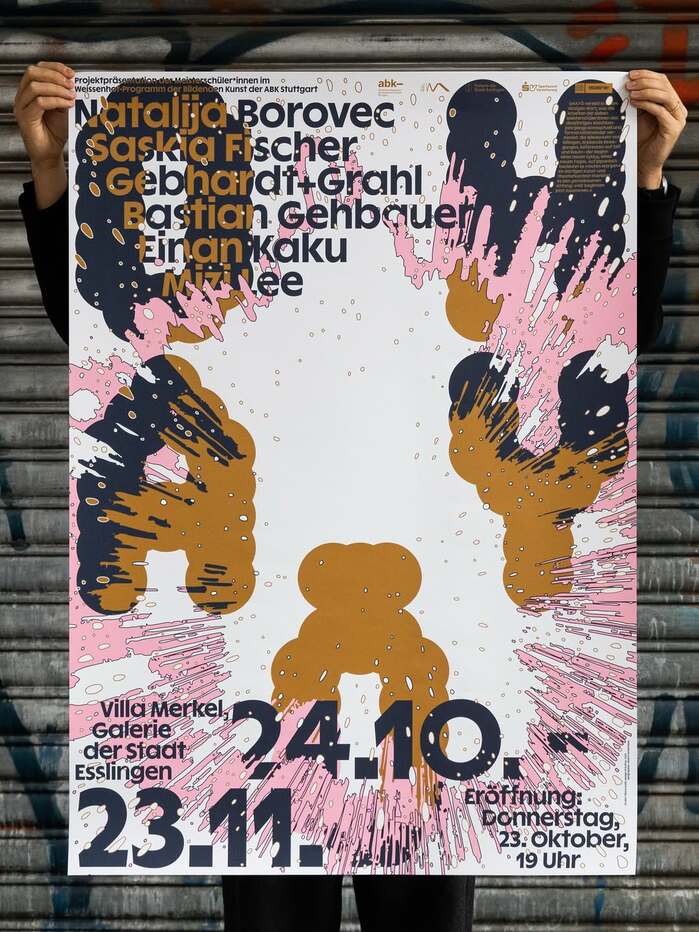
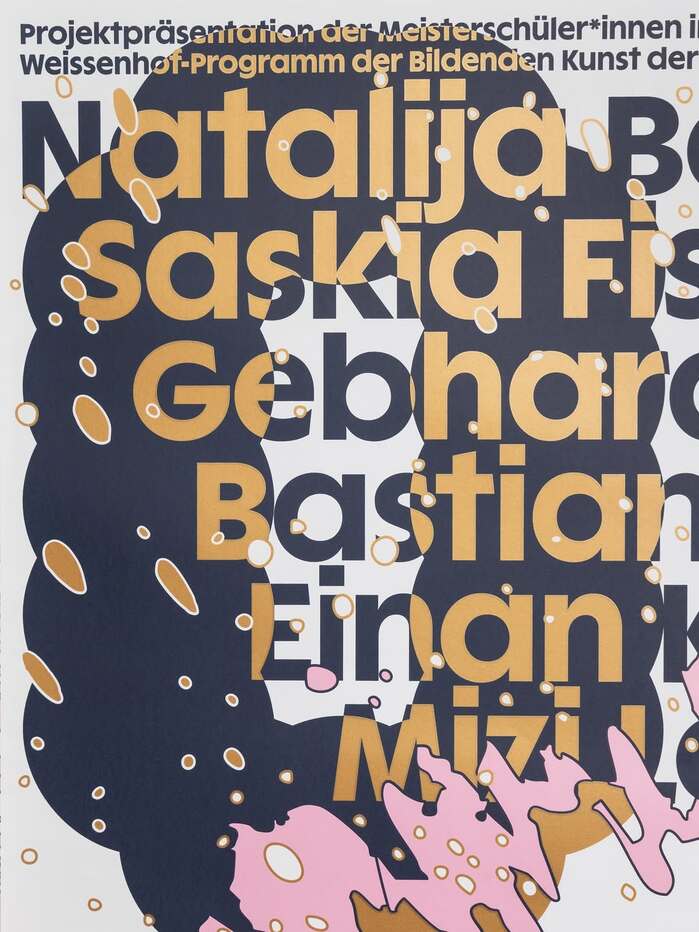
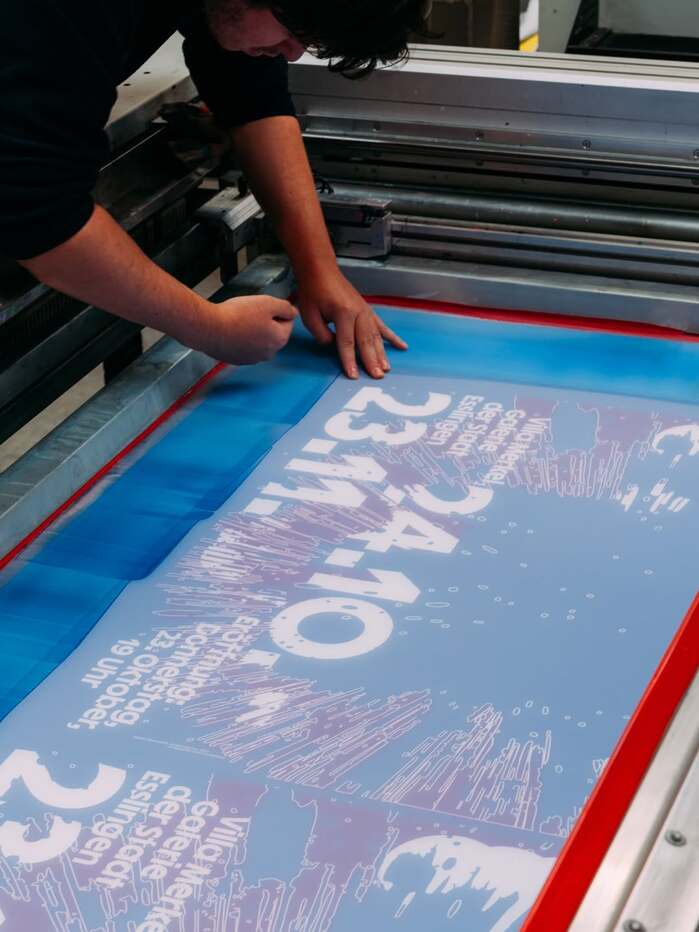
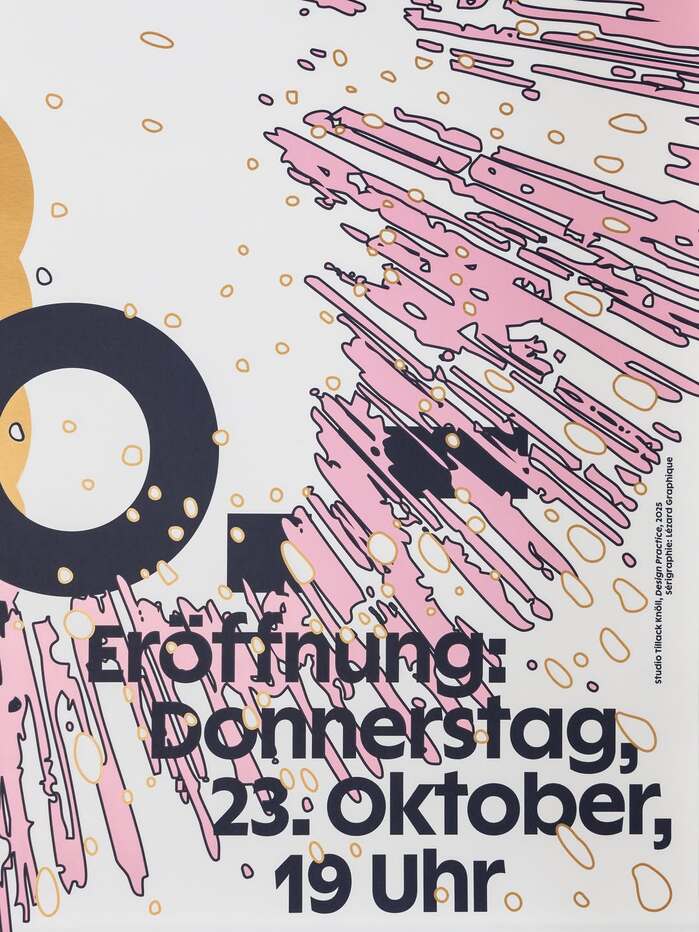
Poster forOHAYŌ,the project presentation of the Master’s students from the Weissenhof Fine Arts program at theABK Stuttgart, shown from 24 October to 23 November 2025 atVilla Merkel, Esslingen. The poster was designed by the team ofStudio Tillack Knöll(consisting of Sven Tillack, Steffen Knöll and Zevako Maryna). It’s a three-color silkscreen print on DIN A0 paper, flawlessly executed byLézard Graphique. The typefaces used on the poster areHAL Magic(designed byElias HanzerandLucas Licciniand released onHAL Typefaces)for the text and information, andOO Theran(in Black weight; byLaura Csocsánand released onOutline Online) for the bold, dot-matrix type of the title.


This typography creates experimental-institutional energy that bridges academic rigor with avant-garde cultural expression. HAL Magic's geometric construction provides rational clarity for information hierarchy, while OO Theran's dot-matrix Black weight delivers raw digital materiality that transforms the title into a pixelated artifact. The combination suggests forward-thinking pedagogy that embraces both systematic thinking and experimental processes.
HAL Magic operates as a geometric form model with constructed letterforms and consistent stroke weights, providing reliable information architecture for exhibition details. OO Theran Black functions as a deliberately degraded digital specimen—its dot-matrix construction creates artificial pixelation that references early computer graphics and process-based art. The pairing works through material contrast: HAL's smooth geometry against Theran's fragmented bitmap aesthetic creates tension between institutional polish and experimental grit.
This pairing follows deliberate contrast principles—geometric rationality versus deconstructed digitalism. HAL Magic's clean construction provides stable information delivery, while OO Theran's bitmap fragmentation creates visual disruption that demands attention. The fonts share sufficient weight range to maintain hierarchy, but their surface treatments create productive tension between institutional communication and experimental artistic process, perfectly suiting an exhibition that bridges academic structure with creative experimentation.