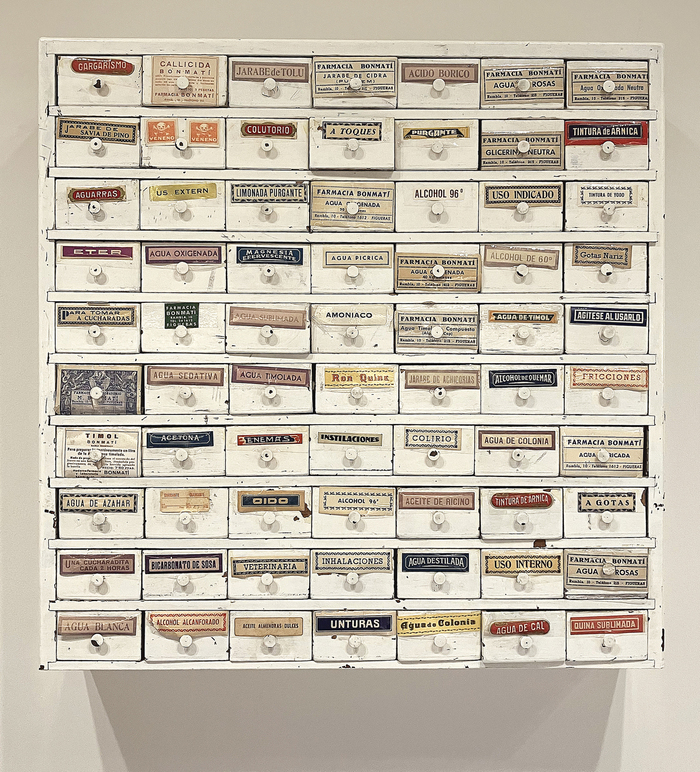

Copperplate Gothic operates on a rational skeleton with vertical stress and closed apertures, but its defining characteristic is the complete absence of lowercase letters — it exists only in small capitals and full capitals. The letterforms are condensed with uniform stroke weight and squared terminals, creating a mechanical precision that feels industrial yet refined. This is not a typeface designed for reading flow but for commanding attention through architectural authority. Its heritage traces to late 19th-century American type foundries and the industrial age's obsession with engineered letterforms, positioned somewhere between a sans-serif and an inscriptional capital alphabet. Copperplate Gothic excels at short bursts of institutional gravitas — law firms, financial services, government agencies — where its compressed width allows maximum impact in constrained spaces. However, it becomes punishingly difficult to read in extended text due to its lack of lowercase and tight spacing, and its severity can feel dated or overly corporate in contemporary brand contexts.